
(941) 366-4553 1215 Beneva Rd, Sarasota, FL 34232

Replace missing teeth

Dental Implants in Sarasota, FL

Dental implants are designed to replace missing teeth with a stable, long-term solution that closely mimics the function of natural teeth. At Tranquil Dental in Sarasota, we carefully plan implant treatment based on your oral health, available bone, bite, and individual treatment goals.

Whether you are replacing a single tooth, several missing teeth, or considering a more comprehensive implant-supported solution, our goal is to restore function, comfort, and confidence with treatment that is carefully planned for your specific needs.

For patients in Sarasota, Siesta Key, Palmer Ranch, and Lakewood Ranch considering options for replacing missing teeth, dental implants are widely regarded as one of the leading long-term tooth-replacement solutions. They can provide stable support for a single crown, multiple teeth, or more comprehensive implant-supported restorations.

What Is a Dental Implant?

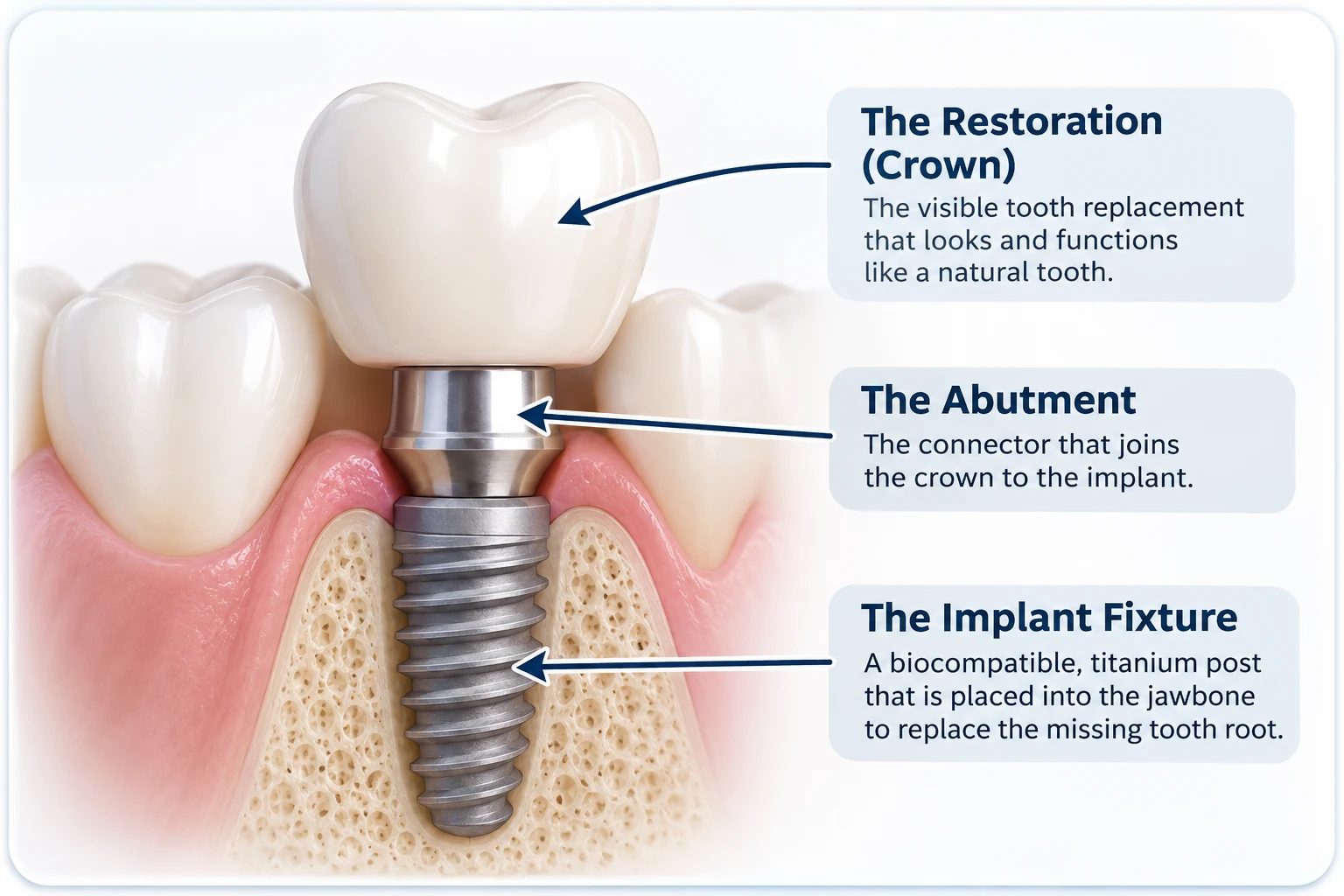
A dental implant is a small biocompatible post that is placed into the jawbone to replace the root of a missing tooth. After the implant has integrated with the surrounding bone, it can support an abutment and a custom dental crown, bridge, or other implant-supported restoration.

A dental implant typically involves three main components:

  • The implant fixture — placed into the jawbone to replace the missing tooth root.
  • The abutment — connects the implant to the final restoration.
  • The restoration — the visible crown, bridge, or other prosthetic tooth replacement.

Dental implants can be used to replace a single missing tooth, support a bridge for several missing teeth, or serve as part of a full-arch treatment plan.

Diagram showing the crown, abutment, and implant fixture of a dental implant

High-Quality American-Made Dental Implants

At Tranquil Dental, we believe the quality of the implant system is an important part of successful treatment planning. We place high-quality American-made dental implants using an established implant line produced by a manufacturer based in Thousand Oaks, California.

Our goal is to combine high-quality implant components with careful treatment planning, precise placement, and long-term restorative support.

Using an established implant system can also help provide access to compatible restorative components if maintenance, replacement components, or future restorative care are ever needed.

Digital Technology for Precise Implant Planning

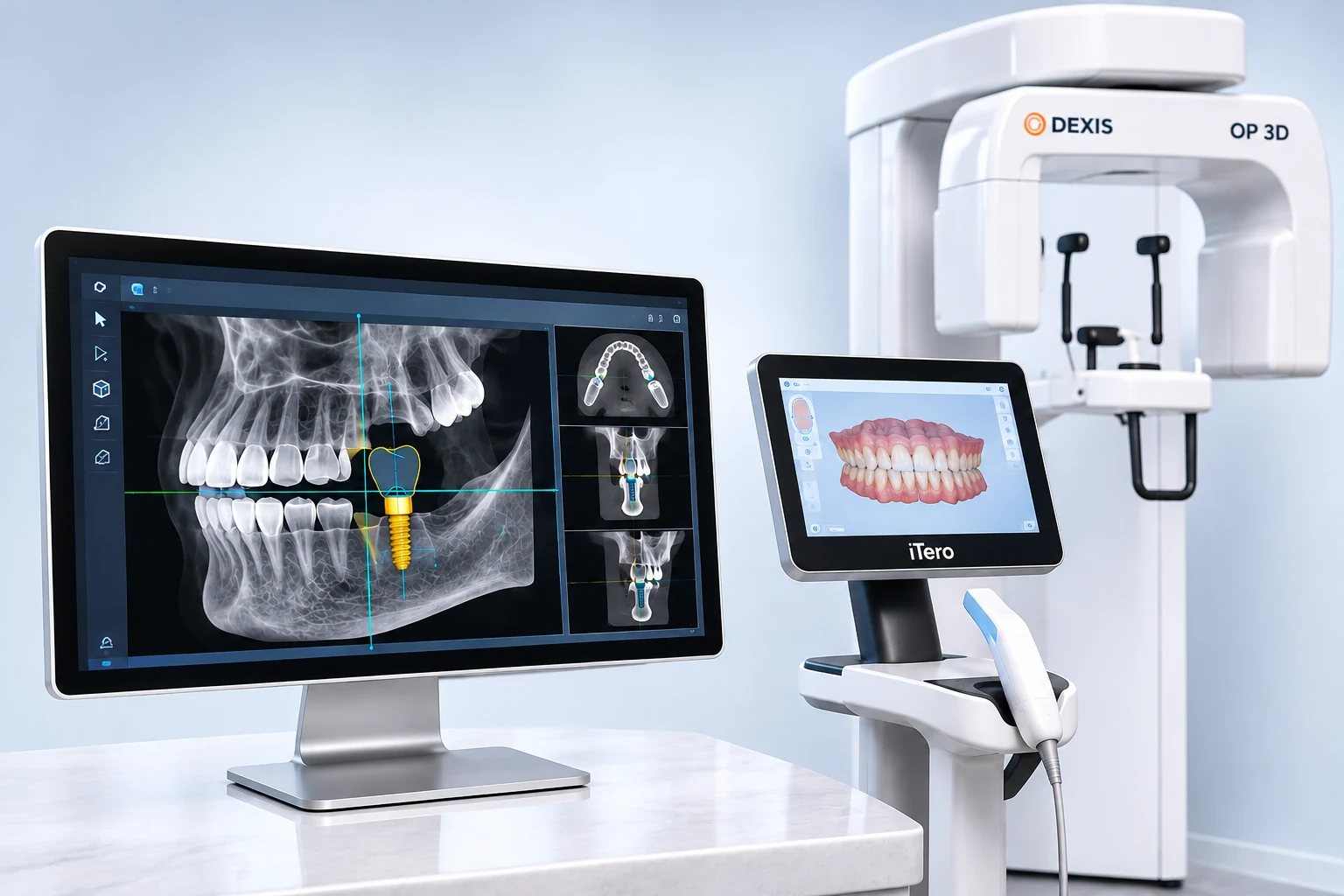
Modern digital technology allows us to evaluate and plan dental implant treatment in three dimensions before the implant is placed.

At Tranquil Dental, our implant-planning process may incorporate several digital technologies.

Digital implant planning technology including CBCT imaging and digital scanning at Tranquil Dental in Sarasota

3D CBCT Imaging

A digital 3D X-ray, also known as cone beam computed tomography or CBCT, allows us to evaluate the jawbone, surrounding anatomy, and available space for implant placement from multiple angles.

This three-dimensional information can help us carefully assess the treatment area and plan implant placement based on the individual anatomy of each patient.

Radiation-Free Digital Scanning

Digital intraoral scanning allows us to create a detailed three-dimensional model of your teeth and bite without traditional impression material and without additional radiation.

These digital scans can be incorporated into the implant-planning process and help us evaluate the relationship between the proposed implant position and the final restoration.

Digital Implant Planning

Using digital treatment-planning technology, we can virtually plan the position, angle, and depth of an implant before treatment.

This allows us to consider both the surgical placement of the implant and the location of the final crown or restoration during the planning process.

Digitally Designed Implant Guides

When appropriate, a custom surgical guide can be digitally designed based on the implant treatment plan.

The guide is created to assist with positioning the implant according to the planned location, angle, and depth during the procedure.

By combining 3D imaging, digital scanning, and virtual treatment planning, we are able to approach implant placement with careful attention to anatomy, restorative goals, and the individual needs of each patient.

Who May Be a Candidate for Dental Implants?

Dental implants may be an option for patients who:

  • Are missing one or more teeth
  • Have a tooth that cannot be predictably restored
  • Want an alternative to a removable tooth replacement
  • Want to replace several missing teeth with implant-supported treatment
  • Have adequate bone and gum support for implant placement
  • Are willing to maintain good oral hygiene and regular dental care
  • Are healthy enough to undergo implant treatment

Some patients may require additional treatment before implant placement.

Every patient is different, which is why implant candidacy is determined after a comprehensive examination and individualized treatment-planning process.

Our Dental Implant Treatment Process

Comprehensive Implant Consultation

Your implant treatment begins with a careful evaluation of your teeth, gums, bite, available bone, dental history, and your goals for replacing the missing tooth or teeth.

We take the time to explain your options and discuss the treatment sequence before moving forward.

Digital Imaging and Treatment Planning

When appropriate, we use CBCT imaging and digital scanning to evaluate the treatment area in three dimensions.

These digital records can be combined during treatment planning to help determine the planned implant position and its relationship to the final restoration.

Implant Placement

The dental implant is placed into the jawbone according to your individualized treatment plan.

In appropriate cases, a digitally designed surgical guide may be used to assist with placement.

Healing and Integration

After placement, the implant is given time to heal and integrate with the surrounding bone.

Healing time varies depending on the individual patient, treatment site, bone quality, and other clinical factors.

Final Restoration

Once the implant is ready to be restored, the final crown, bridge, or other implant-supported restoration is designed to restore function and create a natural-looking result.

Single-Tooth Dental Implants

A single dental implant can replace one missing tooth without relying on the neighboring teeth for support.

The implant replaces the missing tooth root, while a custom crown restores the visible portion of the tooth.

For appropriate candidates, this can provide a stable and independent tooth-replacement option.

Replacing Multiple Missing Teeth

When several neighboring teeth are missing, dental implants may be used to support an implant-supported bridge.

This approach can replace multiple teeth without necessarily requiring an individual implant for every missing tooth.

The number and position of implants depend on the individual treatment plan, available bone, bite, and restorative needs.

Patients who are missing most or all of the teeth in an arch may also be candidates for a full-arch implant solution such as All-on-X.

Dental Implants vs. Traditional Bridges

Both dental implants and traditional dental bridges can be used to replace missing teeth, but they work differently.

A traditional bridge generally uses neighboring teeth for support. A dental implant replaces the missing tooth independently by using the implant fixture as support for the final restoration.

The most appropriate option depends on several factors, including:

  • Condition of the neighboring teeth
  • Amount and quality of available bone
  • Gum health
  • Bite
  • Number and location of missing teeth
  • Overall treatment goals

We will discuss the advantages and limitations of each option so you can make an informed decision.

Why Replace a Missing Tooth?

Replacing a missing tooth can help restore function and improve the stability of your bite.

Depending on the individual situation, replacing a missing tooth may help:

  • Improve chewing function
  • Restore the appearance of the smile
  • Maintain appropriate spacing between teeth
  • Support a more balanced bite
  • Reduce reliance on removable tooth-replacement options

Dental implants also provide stimulation to the surrounding bone in the area where the implant is placed.

Implant Dentistry with Personalized Treatment Planning

At Tranquil Dental, implant treatment is planned around the individual patient rather than a one-size-fits-all approach.

We take time to evaluate your oral health, discuss your goals, review the available treatment options, and carefully coordinate the surgical and restorative phases of implant care.

Our use of American-made dental implants, 3D CBCT imaging, digital scanning, digital implant planning, and digitally designed surgical guides allows us to incorporate modern technology into the implant process while keeping the treatment plan focused on your individual needs.

Caring for Your Dental Implant

Dental implants require ongoing care just like natural teeth and other dental restorations.

Proper maintenance may include:

  • Brushing daily
  • Cleaning carefully around the implant restoration
  • Using floss, interdental brushes, or other recommended cleaning aids
  • Attending regular professional cleanings
  • Periodic evaluation of the implant, surrounding gums, restoration, and bite

Good oral hygiene and regular professional care are important for maintaining the health of the tissues surrounding a dental implant.

How Long Do Dental Implants Last?

Dental implants are designed as a long-term tooth-replacement option, but their longevity varies from patient to patient.

Factors that can affect the long-term health of an implant include:

  • Oral hygiene
  • Gum and bone health
  • Bite forces
  • Smoking
  • Overall health
  • Regular professional maintenance
  • Condition of the implant restoration

The implant and the crown or restoration placed on top of it are separate components and may have different maintenance needs over time.

Dental Implant Maintenance and Follow-Up

After implant treatment is completed, ongoing monitoring allows us to evaluate the implant, surrounding gums, bite, and restoration over time.

During routine dental visits, we can check the health of the tissues around the implant and evaluate the restoration for signs of wear or other changes.

If you ever notice movement, discomfort, difficulty chewing, or a change in the way your implant restoration feels, it is important to have the area evaluated.

Is a Dental Implant Right for You?

The best way to determine whether a dental implant is appropriate is through a comprehensive consultation.

We will evaluate your oral health, available bone, bite, existing teeth, and treatment goals before recommending an implant or alternative tooth-replacement option.

Depending on your needs, treatment options may include:

  • A single dental implant
  • Implant-supported bridge
  • Traditional bridge
  • Removable partial denture
  • Denture
  • Full-arch implant treatment such as All-on-X

Our goal is to help you understand your options and select a treatment plan that is appropriate for your individual situation.

Schedule a Dental Implant Consultation in Sarasota

If you are considering replacing a missing tooth or would like to learn whether dental implants may be right for you, schedule a consultation at Tranquil Dental in Sarasota.

We will evaluate your individual needs, explain your treatment options, review the implant process, and help you understand what to expect before moving forward.